Showing posts with label Film Maker. Show all posts

Saturday, September 17, 2011

Build Home Studio to Record Voice Over

Beraudiovisual’s friends, are you need to put a home studio to record the voice for home videos, indie/independent productions, film and more?

Do you have a computer with a sound card that can act as your DVR? Just add a little low-cost equipment and recording software on your PC, and can produce high quality recordings of voice easily and efficiently. What other equipment do you need?

Microphone.

To get your voice on your computer, you need a microphone. Do not use a bit of shit comes with your computer. High quality abundant cheap microphones and sound much better than that crap. For work in basic votes, I suggest that SM58 Shure SM57 is or. They are rugged, dynamic microphone that sounds good. The SM58 is ideal for female voice, as it reduces wheezing (Esses excessive) in some way. Men can choose from. The two microphones are available from music or audio equipment suppliers for less than Rp. 850.000. Also, get a microphone cable and a desktop computer a good position to hold the microphone while speaking.

Mic preamp.

Microphones put a small amount of electricity that the signal must be amplified. Sound card microphone preamplifier includes necessary. Unfortunately, like the cheapo mic that comes with the box, most of the mic preamps sound card is too noisy for serious work. If necessary you can use, but at least use a better microphone.
For the preamp, you can choose a small mixer to work with your microphone or a dedicated unit. Mixers essentially allows to connect several microphones and other devices (like a CD player) in one location and adjust their volumes independently. The Behringer mixer EURORACK MX602A between 6 microphone inputs, level control, and cost less than Rp. 500.000 Alternatively, two good choices for stand-alone mic preamps include DBX mini pre-tube preamp and the ART Tube MP Studio V3 preamp. Both are under Rp. 1.000.000 and available from the same sources mentioned above.

If you do not invest a lot of high-quality recording microphones, faulty, and your computer's audio interface. Two better choices are mic. For the purposes of pre-amplifier, select a device interface and preamp combination of audio, such as equipment Duo Edirol UA-5 or M-Audio.

Speakers and headphones.

While your computer speakers are adequate for recording, editing and finishing of basic laptops built to serve no purpose. Invest in some decent powered speakers, such as the Roland MA-8 micro monitors, and use them instead. Play back your recordings on a variety of stereo systems, car, etc. to control how they could be transferred to other environments. You can not listen to the speakers when you save, because they receive feedback when the microphone is on. Wear closed-ear noise that keeps leaking them to be picked up by the microphone.

Recording software.

Choose recording software with editing facilities to correct errors, the compilation of the best pieces, add music and / or sound effects, creating special effects, and deliver your finished voice tracks in the formats you need. A "light" version of a program of professional recording is Sonic Foundry, Sound Forge Studio.

Recording space in silence.

Its aim is to record a track clear, intimate voice, and that means keeping noise and the sound of the room outside the recording is finished. Professional recording in a sound booth specifically designed to keep noise and the sounds they make beautiful voice. These costs thousands of dollars and are a little more realistic for informal work. An article full, walk-in works as a taxi of his fortune, however.

Getting a good

The basic integrated sound card has three connectors: Mic-in, line and the line (or headphones) to the outside. Connect the device to connect the microphone to the mixer (or preamp), and connect the device to the output of the line sound card Connect the headphones, too. (If you have dedicted external interface that plugs into that. E 'connected to a computer via a USB port.)

Next, set the volume to a mixer (or preamp), using the controls and level meters. Start talking, watch his feet, and slowly turn up the volume until you get to almost 0 (zero), without going over.

Start the software that controls your sound card (it's usually the little speaker icon in the system tray). This is where you choose your recording source (LINE IN) and adjust its volume. Put this on 100% all the way up, and check your recording levels with your external mixer or preamp.

Start with audio recording software and get ready to save. Records mono, not stereo and CD quality (16 bit and 44kHz sample rate). You will notice that the audio software is not set the level of control, but do not rely on the meters when recording. Never, never more than 0 (zero) to a digital level meter. All this above the level of the distorted sound bad. He wants all the loud noise would fall below 0 for most digital well below the level (between -6 - 15 dB).

Mic technique

Greatly improve the sound recordings, closer to the microphone. The farther away from you, the more you earn the room around you. Your voice sounds thin and distant, like a movie at home. Closer, and your voice is intimate, the voice of the narrator prototype. Another advantage is closer to the microphone, you can increase the lower frequencies in your voice, and that can make the sound more powerful. How close? Put your lips 4-6 inches apart, about the width of your hand. Do not speak into the microphone. Instead, the position above the nose pointed down to his lips. Also, do not place the mic dead center of the lips. Move slightly to the right, for example, 20 degrees off axis. This leaves a clear understanding of the script, too.

Of course, finding their area of registration of any aircraft noise, such as computer fans. Put some distance between the microphone and the noise source. Also, avoid salty foods immediately before the recording session. It takes a little close to the warm water and apply some lip balm. They keep the mouth and lips lubricated. Eating a few slices of apple can help overcome the dryness of the mouth, too.

When you are ready to save, turning away from the microphone. Take a deep breath. Exhale. Take another deep breath. Open your mouth, back to the microphone and begin speaking. This technique eliminates the net consumption of smell and lip breathing, which often occurs when you start talking.

Speak slowly and clearly. You can always increase the recording during the editing stage. If you make a mistake, return to the closest phrase to start again and continue, even if you only one or two voice errors. Cut in a voice or phrase is difficult and does not seem natural.

Editing Records
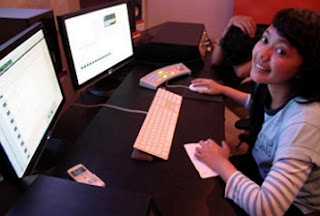
There is no need to nail all in one take. Record the highest number of run-through, and the need to assemble the best of the last recording. Listen and evaluate what you did. Everything is there that you need? Sound good? It is the right level (not too low, does not distort)? Otherwise, go back and re-record the bits you need, listen, and repeat until you are satisfied.

Change the sound is like editing a voice processing program. You will not see the voices, but you can not see two-dimensional presentation of voices as sound waveforms. And you can hear the voices while playing. You can manipulate the waveforms as a move from voices on the Voice Processor. Cut, copy, paste all the techniques you're already familiar with the subject during audio editing.

Before you start editing, turn off the microphone, disconnect the headphones, speakers and go. It 'clear, to remove what is not necessary, as a clear his throat before he started talking, no talking between takes, strange voices, and so on. After removing the waste, to move towards improved performance. If you have several companies in the script, finding the best takes and build the last version of them.

Listen to the fundamental changes they make. I think that taking a long break, you can approach the records again with fresh ears. You can do better? The volume is constant? Do you hear noise, background noise or other unwanted parts could be eliminated or reduced?

After editing the voice, you can add sound effects or music to soften the last version. To add music with Sound Forge, open the music file on your audio software, select and copy to the clipboard. You may have to cut the music to match the duration of the voice recording in the first place. Next, place the cursor at the beginning of the voice recording and select Edit; Paste special blend. "Here you can control the level of the music (source) in connection with his voice (target). Ensure that the mixture again to ensure that you can listen to the recording of voice clearly with the background music.

As a last step, the use of software standardization process to maximize the volume of the audio recording. Select the entire signal and normalization of -0.10 dB (98.86%). Save this file in audio format you need, for example, MP3.

Now, you are ready to have a great voice over!
Read More >>

Friday, September 16, 2011

The Most Powerful Weapon of Filmmaker

The most important low-budget filmmaker is creative mind. It all starts with the original idea, there is a question of nourishment that thought until it grows to be a great idea. After that, it's something to this idea of making the film in every ounce of energy and resources, you may be able to bring up.

Movies are the most successful film festivals these days with films that were made in a fraction of the cost required to make a major Hollywood film studio. Technological advances have made that anyone can make a film. Film cameras, video cameras, sound recording equipment, and almost any other type of equipment you need to make a film can be bought at a very affordable price today. The computer that is available these days can provide a low-budget film with a very low production value that looks like James Cameron had something to do with the project. This professional look, along with a unique story can help any film likely to be accepted into film festivals such as Busan Film Festival, AVFEST (AVIKOM Festival), Toronto Film Festival, Sundance, etc.

Try as they might, the major Hollywood film studios never have a monopoly on creativity. They spend millions of dollars on search marketing in an effort to understand exactly what the audience of the film is the appearance of the world when they go to the films. Despite these efforts, we still have not found a formula. The tastes of the people going to the films are hard to predict how an earthquake is on the ground changes all the time. Because of this, the door remains open for creative professionals in the world to enter the game. All you need to do is come up with a unique idea that can turn into a film, enter your film in festivals such as Sundance, and then let the judges decide. While large studies have attempted to take over the festival circuit in recent years, provided the children with small, however, films are king creative in this realm.

It does not cost as much as you might think to make a film, that you can participate in competitions such as the Sundance Film Festival. Sony plans to release a line of high-definition camcorders that are perfect for those who want to make films with small budget. Even if the films are made of these cameras is described as a "film" (as the films were from the beginning), are (almost) seem to have been. These new cameras are able to provide high quality images, which is comparable to the image that the film offers. Two cameras are the PDW-F330 and PDW-F350, and offer all types of film properties, even the most faithful to the film a professional director to be respected. Both cameras offer true 24p recording in SD or HD, interval recording of shooting and recording a pair of lenses. F350 model also offers true variable frame rate recording which is also called "slow motion / fast motion" features.

Features like this are invaluable for anyone to make a low budget film, because it allows them to include motion effects in their films without the help of a cheap film camera or a film lab to high prices . Both cameras will be on the market in March 2006. The F350 costs about 25 000, while the F330 model will cost only about $ 16,000. PDW-F30 decks will be available in June through the 9000th These are small prices to pay to be a self sufficient independent filmmaker.

A filmmaker on a budget you can invest in an HD video camera and relatively cheap housing and have everything you need to make films as well as the mind and body can handle. All you need after a creative mind, a few thousand dollars, some friends of his actors and ambitious team, the screenwriting software such as Final Draft and a strong desire to make a film. They do not have to worry about the high cost of film, developing film, or film to DVD transfer. All you need is your camera and a $ 30 drive (23.3 GB) and will be filming an entire film. Buy a camera records is much cheaper than the films and buying all the baggage that comes with it financial.

When they shoot their film with one of these cameras, a filmmaker on a budget goes directly to their computer with the disk and start editing it using one of the many editing programs available that are affordable to our days such as Final Cut Pro. They can do all the work of post-production for their films on their computer at home as long as they are willing to take a load of the mother of their professional responsibilities.

Technology has made independent filmmakers to bypass many costly steps in the process of the film. Instead of paying a lot of people in millions of rupiahs an hour to film services are available only in cities like Jakarta and Bandung, they can now do all of these steps in the comfort of their own home on their own computer.

For anyone who has ever had a dream of making his own film, there's no better time than now to get there. The playing field was leveled in terms of technology, but also need a creative story to get anywhere on the festival circuit. Affordable equipment can be put down, but we must make a good game to win. A creative mind is your best player in this game, so if you have that part in charge of you are half way to make your vision a reality film. Feed your creative idea until it becomes a single script, then devote his life to making the script into a film. If your idea is as good as you think it is what you will do very well on the festival circuit. If this happens, could lead to a distribution agreement decent film. If you stick with it and keep making films that you can even find that you have made a career as a professional artist who makes independent films, and that dreams really can come true.

Read More >>

Thursday, September 15, 2011

10 Tips That Will Help To Make Your Short Film Better

Beraudiovisual's friends, here is a listing of some of the most essential factors to keep in mind when making a short film. Following these recommendations can help you prevent the more common problems. While these are just recommendations, they may almost certainly increase each your film as well as your filmmaking experience.

1.    Make sure you have a story worthy of informing
Could you sit through the short film when someone else had made it? The answer for the unexpected quantity of shorts isn't. Think about this problem even before you begin writing the set of scripts.

2.    Don’t start production without a budget
Films, it doesn't matter how easy, have a price -- and money is definitely restricted. Start by making sure you have a budget (a simple spread sheet may carry out), you are able to choose in advance where you desire to spend no matter what money you've. Without a price range, you are able to almost guarantee that you'll possibly waste your money as compared to you want, or perhaps end up without the completed film.

3.    Find all clearances before filming
You may need, need, NEED releases through actors, music/artwork contributors, and also someone else who creates content that will shows up in the film. Getting settlement signatures before the shoot is easy and takes you times. After the shoot, it may be hard to not possible. Don’t obtain caught, do it.

4.    Make the film shorter than you wish
Writer/directors usually generally leave things in the film that the viewers can definitely do without. It’s so distressing to cut away stuff that were difficult to shoot. Be sure to undertake it. Your viewers may thanks a lot.

5.    When you use non-professional actors, cast with character
In my opinion undesirable acting is really common in short films because people are usually requested to learn characters that don’t resemble their personalities. The dirt-poor professional actor or actress can easily depict the swagger and also confidence of the billionaire – but many newbees can’t. If your direct is an anal-retentive tightwad, don’t cast the slovenly shirker to learn him or her.

6.    Invest in great audio
Poor audio quality can make many short films (even ones with excellent stories) unbearable. There are no real substitutes to get a good boom mike. Beg, buy, or perhaps borrow one and it'll multiple the probabilities your film is going to be watch-able.

7.    Repair it right now, not in post-production
Without Digital Domain or WETA on your side, most post-production fixes don’t look/sound very good and take A Considerable time. If you have an error within framing, conversation, or perhaps other things that may be fixed on the shoot, do it!

8.    Don’t  zoom in a shot
Don’t touch that zoom button! A very excellent cameraman can produce a zoom look Fine. In almost all cases, though, using zooming is the characteristic of the depressing work. If you want to push in on the subject, work with a dolly, video camera glider, or perhaps a cut.

9.    Be aware of indie/video clip clichés
The most typical clichés include using fantasy sequences, a lot of dissolves/wipes, long credit sequences, or waking to a ringing alarm. There actually seem to be several sites devoted exclusively to citing indie/video clip clichés. Understand what the actual clichéersus are so you can create a smart option on whether to use them or not.

10.    Unless you’re filming on film, avoid night time exteriors
The dark is the enemy of all video cameras. You’ll become familiar with noise, color shifting, definition drop-out, and much more if you decide to shoot at night and not using a medium size equipment and lighting package. This’s commonly better to change the set of scripts than handle all these problems.

Are you ready to make a short film now? Yeah! Just Make It!
Read More >>

Wednesday, September 14, 2011

Overcome 10 DSLR Disadvantages

New Revolution for Film Maker
Since Nikon introduced D90 in August 2008 as the first DSLR camera that shoots video High Definition (HD), a silent revolution taking place in the production of media. At a fraction of the budget creative camera people are capable of producing high-quality recording is outstanding-all with the build-out stills camera for a total investment of $ 7,500. This is good news for a film maker!


Result of DSLR Video (Trailer of "SAVING BROTHER" Directed by Rio Simatupang


The Visual beauty of the depth of field
A shallow DoF allows you to focus on the subject, leaving the rest of the focus. This isolates the subject from the background and allows you as a movie maker control where you want the audience to put their attention. If all sharp, the Viewer could easily be led astray by details not relevant to the story. And it just seems amazing.
Working with a shallow DoF is not easy: topics that move implies that to keep shortly taken you to the focus ring (also known as focus always) to keep.

Top 10 DSLR disadvantages & how to overcome them
If there is not bad at all when it comes to this way of production of the video? You betcha! However, there are also a growing number of ways of their solution. Let's take a look:

Audio
Second camera DSLR suck in the recordings. Built-in mic is miserable and the camera does not feature professional XLR input. In addition, should determine the automatic gain control (AGC) in the next firmware upgrade and allows at least on the screen for manual control of the levels of dB. In addition, there is no way you can monitor the sound through headphones, the LCD is turned off when you set a limit on the Canon 5 D head AV (7 D has different plug).  But then again, audio recording has never been the subject of the project. Enter magnification. H4N handheld recorder provides a DSLR-shooter simple device which, supplanting the sound recording, allowing for up to four independent channels at the same time (1 x front and 2 crossing stereo XLR input external mics). Synchronization takes place on the positions of the signal reference, such as clap hands or Clapper boards at the front of the camera. You should therefore key to keep the audio recording on a DSLR for a sound reference. And if you are editing Final Cut or Sony Vegas, enter PluralEyes (too bad I'm on Adobe Premiere Pro). If you want to manually control the audio on the camera itself, Magic Lantern firmware hack may be an option.

Stability
First of all, a stills camera is built to maintain constant for about 1/60 of a second, not to register or for more than 24 frames per second (i.e. shooting movies). Enter The Zacuto. This Chicago-based company, founded by people with a history in camera work, one after the other cranks innovation that helps DSLR shooters to stabilize their photos. Also: enter CineKinetic (or Visual departures). Using Mini-or BabySaddle (or SteadyBag much cheaper) allows you to create stable pictures even while moving objects such as a car, train, tram, bike plan or air. For those who like to go: enter the Glidecam. And for those who are ready for more pictures of dolly: enter the GlideTrack and WallyDolly. However, be careful with the movement too quickly as chips CMOS sensor offer some jello effect (see below).

Light
DSLR cameras beat any camcorder, when it comes to low-light situations, fair and square. Nevertheless, and this applies to any type of camera with sufficient and correct amount of light is critical to the final result. Various vendors have entered this arena, offering useful equipment at interesting prices. Enter Dedo Ledzilla and Litepanel micro.

Display
In order to be able to judge sharpness, you need appropriate scenes. Because it is blocking the camera lens on a DSLR when entering live mode (i.e. required when shooting video), you need to see the details without scattering light from falling on the LCD screen. Enter (again) with the Zacuto Z Finder. Looking through the lens is not an option due to the position of the camera? There are alternatives such as the original 720 p LCD smalhed.

Filters
If you want to go to the shallow depth of field, you must open the iris on the camera. The stills camera this can easily lead to the exposure. Most photographers will be tempted to start to change the ISO or exposure time setting. The shutter must be stored in twice the frame rate, you shoot (e.g. 30 p – > shutter at 1/60, 24/25 p – > shutter at 1/50, 1/48 is not supported) to adhere to rules 180 degrees in film shutter. The best way to reduce incoming light: enter the neutral density filters from Singh-Ray (actually two circular polarization filters, merged into one). It gradually reduces the incoming light from 2 until 8 stops.

AVCHD Editing
DSLR cameras record in AVCHD format using the codec h. 264. Cineform Neoscene, creates intermediate format using wavelets to decipher those much needed intraframe image and reduces your CPU from having their calculation.

Rolling shutter or Jello effect 
In fact, this is a problem on most DSLR cameras. The effect occurs best when you pivot the camera quickly or enter part of fast moving objects. Solution: more slowly and in post speed not whip Pan – record. If this is not an option (such as you have people or moving objects in frame), exists to fix an after effects/Nuke plugin called RollingShutter. 

Compression against color
Although DSLR HD video sensor capable of recording full frames (35 mm) is used a lot of compression recording compact flash card. This means that the component video (4: 2: 2 or 4: 4: 4) are not normally available on the classification of the color and consist of a signal. This makes it difficult for color grading, chroma keying, Matte painting or Rotoscoping, enter more pain. However, the main classification of post-production color: enter the RedGiantSoftware. Using Magic Bullet looks makes it fast and efficient (or slow and comprehensively) of their shots. Philip Bloom explains. If you still want more: Cineform will help you through the process again to create a 4: 2: 2 intermediary file format. Not ideal but workable.

Recording the border
Limited to save on most DSLRs on the clock to five minutes for a single navigation. For what value from what I hear, this is something with the import restrictions. If they go beyond These products are not regarded as a stills camera, and a different tax categories. Another story tells that there is something to a 4 GB file size limit (partial support for 720 p will fix that). How do it in a comment there if you are recording live events, capturing most often is shorter than that of the most important things for the sake of coherence is to record sound correctly — you can fill in a gap in the post later with special ingredients, you kick before or after an event (or stills from a slide.) If you are recording a live presentation.

24/25 p and 30 p
To achieve this look cinema or film, recording video the way film is traditionally. The meaning of p 24 or full 24 frames per second. The planet is NTSC framerate 29, 97, while 25 in PAL markets. Snapshot initially thought players, you can change the world by going ar 30 (dadon, drop-frame) as a new standard for video. Erroneous. Because there are still way more TV cameras on the planet, this has been shown to be losing the battle from the outset. When matching to 30 pp 24 actually shooting slightly slow, or ask your output or combine frames. This gives a slightly notable visual effect, audio synchronization problems, as well as easily. Canon may be wrong, and start to correct it. D Canon 7 now supports different frame rates (24/25/50 in PAL)-24 30 60 in NTSC, while fixed long d 5 Mark II (hope?) is due for release in January 2010. Haya Canon, makes us more than happy!

The Conclusion of All
should go to DSLR or stay with (semi-) professional video device? My answer is that everything depends on what you're doing. The key is the comparison of time compared to the budget. Me, that work with DSLRs, as digital cinema, is probably better suited for those who have time to set things right, if only assured, are met, the disadvantages (read: check the subject of the audio and record sufficient background or set up noise!). Without stabilization device and manual audio recording may not be the best DSLR camera and when Obama wants to meet in the press for a quick interview. You may want to shoulder-mounted ENG camera to it. A typical price points, however, are not within the budget of most people. So, if no time is of the essence, with improved DSLRs is very, very attractive alternative.
Going to make you fly on DSLRs and filmmaker? No, because it takes a lot of practice, knowledge, talent and learning. Since recently WIRED correctly, "it may be expensive DSLRs, but talent is priceless". However, with at least the possibility of taking beautiful pictures, and more people started shooting (and actively promotes the Canon), high-quality content (even for 1080p) Web site that looks like it was created by using professional cinema equipment in explosive growth expected. And that's exactly what I business.

Beraudiovisual's friends, what about you?

Read More >>

Tuesday, September 6, 2011

The Cost of AudioVisual Solutions

Once you have your audio-video great concept, it's time to ask: What is the cost of audiovisual solutions to your sales site?

Video

How much should you spend on video equipment depends on what you need to register. If your page design calls for something more stimulating than video testimonials from satisfied customers or some sales pitch from an insider of a company, you can probably get away with a webcam and USB high-end special emphasis on some sounds and lights. If you want to shoot some footage of your product being tested or used in the field, you want to invest more money in a more comprehensive and powerful, something that gives you more interesting lighting options and you can save information in a variety of video formats.

Recording Equipment

All good car will probably be the microphone. No matter that the microphone is something you want to use or not is another matter. Most trains, micro cameras do not give you the ideal voice recording, and make it difficult to develop the final product. The microphone is usually very close to moving parts of the camera for a clear and continuous, leading to ring and disturb the general atmosphere of amateurism. So go cost effective solution for audio recording is not a good idea.

On the other hand, there is no real need to get more expensive in terms of registration. There are many microphones designed for the professional work of film and audio recording professionals. These microphones are designed to eliminate all background noise to capture the full fidelity audio signals, and generally provide the audience with his beautiful and charming. But here's the difference: to store movies and music are themselves the products they are trying to sell.

If you buy a CD of your favorite band and the record is horrible, you feel you have received an inferior product. If you look at a Flash presentation for an operating system with audio recordings doubtful, can not really draw conclusions about the product-what matters is not the clarity of sound, but how the product works in the team .

So the key is to get the audio recording equipment that provides high fidelity sufficient for you to hear all of your dialogue and music well, but that does not break your bank gives you a lot of growth and unnecessary "cherry" . A directional microphone that can often do the trick, and will not cost you more than about $ 20-40 depending on how complicated it is to connect your microphone to your computer, camera or other recording device.

With a little attention to the sound-recording (as discussed in a later chapter), you should not have more than unless you really focuses the sound as a key, or if we do something complicated your sales presentation (which can probably be reduced without any problems.)

It's generally a good idea to spend as much money as your budget allows, when it comes to a control device. After all, it is unlikely that the first Web-enhanced visual audio will be the last. You will have several ideas for products, and you have to build more sites to market and sell.
Read More >>

Tuesday, August 30, 2011

Important Points Before Writing The Scenario

Suit yourself while writing
Beraudiovisual’s friends, are you learn to write scenario this time? If yes, then there are some things you must know before writting scenarios. The scenario is the most important element in a film production (television) because it is a necessary element  earliest as a draft to make a film.
 
Basic story
Before creating the scenario, we need to know what we write. You do not immediately rush, the first scene. The first thing we need is the basic story (basic story), a statement of who, when, why, where and how the things we want to create a scenario. Basic story, we can also express as a summary of the general or global view.

Character
In a scenario that we create, numbers will appear. We need to recognize and deeper. Worth a lot. We know how to figure the dialogue, thinking and acting. We will know how the hero would solve the problem. Also, conflict as between one character with another character.
In this phase, the player search (casting), explanations of characters is also very helpful to have created the appropriate player to play the character. In addition to the player himself will be easier to understand the character he was playing.
For the development of character, we can do this by providing data on: the full name and calls, religion, age, familial relationships and friendships, favorite (science, movies, music, sports, reading, eating), physical characteristics, intelligence, fashion style, manner of speaking, properties, houses and others.

Set / Location
To create a scene, we must determine the sets and locations (where the scene takes place) in advance. This will allow us to determine the scene. What do you do, the position where, from where, where watched, or to see in which direction.
The scene takes place, which could be built on the studio sets, such as living in the house like a porch, a living room, living room, bedroom, kitchen, or we use a part of building a proper home. The definition is not always to be home, but also the road or elsewhere.
Explanation of this sentence, but are useful for us in the scenarios also useful as a guide for the set builder sets in the studio or production unit for the building to building, which will serve as a set to meet the requirements of the scenario to find suit.

Synopsis
Before writing the script, we must ensure that the story creates a script. Not invent a story if the scenario is created. The history we can give a succinct but contain elements of character, time and place of incident, problem, problem and solution development. This is a summary.

Chronology Stories (Story Line)
If the summary, which we have made, will be developed into a scenario for a TV show with a duration of 24 minutes, we describe it again in a summary of the plot (plot) in four rounds (ACT) with a calculation interrupted the radio commercials will be as much as three times divided.
The purpose of the act is to developmental disorders and dramatic elements that can create are completed in one phase in each fragment sequence that ads less intrusive and creates a scene at the end that makes the audience want to know the rest.

hopefully with a few points above, it can help Beraudiovisual’s friends to be able to write a better scenario. Do not forget, Suit yourself while writing.

Read More >>

Sunday, August 28, 2011

Canon XF300 and XF305: Professional Camcorder for Professional Production.

Hello beraudiovisual's friends. It is not hot news, but it is important! Canon introduces two new professional camcorder, XF 300 XF 305 is a gift. Two of the latest innovations based camcorder professional video and film production for the article will be hired. Newcomers to the rank of this camcorder compact flash card (CF) can be written directly to the roll-out is a professional camcorder.

Combining video, audio and metadata into a single file, Canon 305 XF 300 and XF using MXF (Material Exchange Format), which is an open format. This format is useful to maximize compatibility with existing video non-linear editing system. Video recording format MPEG-2 Codec Canon also produces high-quality digital video with bit rates up to 50 Mbps. Specifically for Canon XF 305 is also equipped with features Genlock output terminal, Time Code and HD / SD-SDI terminal, which serves to produce a variety of video cameras and 3D films.

Canon Camcorder 305 XF 300 and XF uses MPEG-2 Full HD (4:02:02) file-based recording codec to produce a professional video with crisp detail at a resolution of 1920 x 1080p (Full HD). With three Canon original CMOS sensor ditanamkannya, both camcorders are claimed to produce digital video with natural color gradation.

Canon Camcorder XF 305 XF 300 and lens 4.1 mm - 73.8 mm lens equivalent to 29.3 mm - 527.4 mm in 35mm format camera. This lens has a 18x zoom ratio so that comes with Manual Focus mode can be set easily by the user. Canon also uses IP-UD Lens (Dispersion-High Index, Ultra Low) and aspherical which serves to reduce noise to provide a sharp color and compact size. Lens also is integrated with new forms SuperRange Optical Image Stabilizer system (OIS) feature Powered Dynamic mode and increase the performance of the sensor to produce a focus more quickly.
Canon-performance XF 305 XF 300 and feel much stronger because it comes with swappable dual card slots and UDMA CF card which allows file transfer to PC / laptop with you. To support the use of XF Codec Canon, Canon worked with major software developers like Adobe, Apple, fans and Grass Valley. This is to ensure unity between the camcorder with the software programs which are often used in film production, video production and broadcasting industry.


Canon XF300 and XF305

Another special two Digic III processor, professional camcorders use the DV required to capture the natural colors accurately. Innovative strength DIGIC DV III processor Face Detection technology, features, where users can specify the primary interface in the video group and automatically focus on the main page, even if the subject is moving.

Both camcorders are also designed for maximum comfort and flexibility. Design Canon 305 XF 300 and XF allows users to take video images without holding strong in the arm fatigue. Both are also equipped with LCD 4-inch 1.23 million dot resolution monitor that can rotate and can be placed anywhere, either right or left side of the body to further facilitate the camcorder also see the video taken of the position to make a video most difficult.
Visual Advantage XF 305 XF Canon camcorders. 300 and sound perfected by the flexibility offered. Features built in microphone and two XLR inputs it has external audio sources that can catch, so the resulting sound quality is clear and sharp sound. Canon XF XF 300 and 305 also supports 16-bit PCM audio at 48 kHz with a level of audio adjustments automatically and manually.
LCD monitors are both brand new camcorder also provides a display Built-in Memory waveform and Vectorscope to help achieve the level of exposure and color accuracy when shooting video. Not only that, the LCD monitor can also show the focus and zoom the image, allowing the user to confirm the object in HD format. Equipped with an electronic viewfinder 1.55-megapixel camera, professional video camera provides the highest resolution in its class for critical focus and 100 percent coverage in appearance.
Present through PT Datascrip as sole Canon products distributor in, Canon XF 300 priced at IDR 79.65 million. While Canon 305 XF marketed at a price of IDR 90.81 million.


Are you ready to be a Pro?


How beraudiovisual's friends? interested to use it?


Read More >>

Simple Helicam, Combine The "Helicopter Remote Control" and Canon DSLR camera.

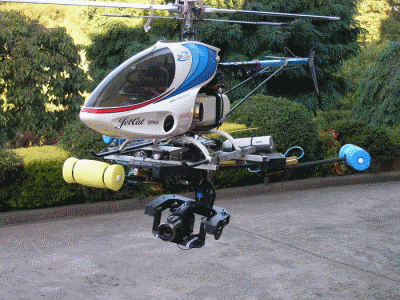
Hello beraudiovisual's friends. For you a crew of film production or television production, must be familiar with helicam. Helicam is a unique tool that can photograph or record images from a height, because the tool can fly. The principle of this tool is simple, and can even say there's nothing special, just like a regular camera placed on top of a toy helicopter. then we steer it. But the cameras used in Helicam this is not a regular camera, but Canon 7D DSLR cameras, in addition to the tool is also equipped with GPS (Global Position System) which allows us to continue to monitor the existence of this instrument when flying, and with a 5.8 GHz video monitor system , allows you to see every moment that was caught on camera this tool.
The Real Pro Helicam

The Real Pro Helicam


In a process to get the perfect shot, Eric Austin, a videographer who resides in Texas, found a neat way to combine the "helicopter remote control" and Canon DSLR cameras so he could air the video shoot with ease and get the kind of record that should be difficult to obtain. 

"I took a helicopter hobbyshop and modified to be fitted with a camera, so I can get a low altitude, the air close and tight shots," said Austin Wired.com.

An amateur videographer who became a pro, Austin is interested in photography remote control just four months ago.

 "As I do more photos and video, I realized I could develop a niche where I can use technological advances to provide the type of photos that most people can not get it easily," he said. 

Austin is one of the hobby photographer who finds a way to use a remote control toy airplanes and helicopters to get a more interesting camera angles. Wired magazine Editor-in-chief Chris Anderson in a site called DIY Drones where the user has found a way to use unmanned aerial vehicles to conduct aerial photographs. Last year, New York City photographer Anthony Jacobs showed a helicam built using German helicopter rig named MikroKopter. Jacobs uses helicam rig to shoot the video neighborhooods in the city. 

Austin, who has a website devoted to his RC helicopter videography, Saying he wanted to do something similar and offer quality HD video and photos. That is why, he said, he decided to create a rig that will be reliable and produce a type of recording that can be used by professionals. And as this clip shows, the video can be interesting. 

Aerial video with the Canon 5D, 7D AUSTIN helivideo.com from Eric on Vimeo.

Footage shot so far, Austin has helped to TV shows including the History Channel series of slices.
Austin started with a remote control helicopter called Align T-REX 700 and modified to carry a particular frame of the camera mount. He put tweaked landing gear for helicopters, covered with bright pink foam from "Noodles" is commonly used in swimming pools. 

"The color stands out when I fly outdoors helicopter," said Austin. "And if I hit the water, the equipment all my life will not go down. It will be destroyed, but at least I'll get my teeth back" Austin said.

He adjusts the camera settings when it's on the ground and pressing the Record button just before takeoff. For still images, Austin said he uses an external timer that activates the shutter every few seconds.

To create a video of the flying rig, Austin said he spent hours in online discussion forums at Helifreak.com.

"I do not know anyone to talk to," he said. "And then realized the only place to go is online where people discuss this."
Eric's Helicam

Eric's Helicam


One of the more challenging task of Austin has done with his helicam ie flying over a cliff about 25 meters high with a river below. And he did not destroy the helicopter.

"The likelihood that accidents will happen there, but so far, I have been careful," he said.
To download video, Austin has established a 5.8-GHz downlink the video feed using a wireless transmitter on-board.

All this does not come cheap. Austin estimates the whole rig cost him about $ 15,000. But for those at home, who want to do something similar, he says there are cheaper alternatives.
The results

The results of image shot from helicam.


"I go for the best and most expensive components because I do not want to risk it fails the air," he said. "But you can get an RC helicopter for about $ 400 and put the camera point-and-shoot on it."
Read More >>

Friday, August 26, 2011

Independent Film Production (Easy Ways to Filming)

Hello beraudiovisual's friends. As u know, playing with a handycam is a distinct predilection for the community lately. Popularity handycam sticking supported by the emergence of communities of independent (indie) filmmakers. There are many independent film community, such as the Audio Visual Communications (AVIKOM), Study Groups Make Movies (KBBF), Community of Documentary Film, Home Cinema, Etnorefrika and much more. Even Sampoerna was also have a program Make it easy for film students of junior high and high school, in a simple film-making manuals were already published in the form of VCD.
There are a variety of cameras that can be used to fulfill this hobby, from the manual to the digital. There have been many also offer other types of cameras which also can be used to record moving pictures, let's call him Handycam. The shape is more simple but its function is much more complete than previous cameras. From this beginning the emergence of communities of independent film makers that have sprung up, let's call him indie community.
beraudiovisual's friends, Community filmmakers do not have to follow the standard film-existing grip, but they always look for a different form of films on the market. The films produced were quite unique and desirable only certain circles.
In Surabaya, there is a documentary film community who every year hosts a festival of documentary films.
In 2010 and is the second year of making a documentary film festival (FFD) is. "The film we nominated a special award at the festival yesterday. Actually we just want to learn handycam to charge the Eid holiday, there are friends who invites trus make a movie to be included in last year's festival. Wow ... seruuu really! Besides a lot of experience know more about the courtiers, so I also know who they were in AJBS Surabaya,''said Rima one FFD participants who make the documentation about the courtiers with his friends. Simple documentation can be done by anyone, anytime, without being limited by the grip-specific standard.
Michael Rabiger said that the documentation process does not depend on the time that is past or recently, but can also be documentation of the future. Some elements in the documentary include: pay attention to the place and time, lifting the actual themes, as social criticism, convey the reality and actuality, to open one's mind and can also form a series of in-depth story. Some of those views can be used as a guide line to make a simple documentation.
Making the film was simple but not easy. Why? First, we must know what our goal filming itself.
Although filming a documentary though, we must know the purpose of filming the documentary. Why is it called a documentary because the documentary is identical with the realities of life, everything that is actual and not artificial. However, still the name that movie is an image make-fib.
It means we can arrange just about anything to get pictures as we want. Second, each must be accompanied by documentary film-depth research about the material that will be displayed. This research can be done with the interview, book study and others. Anyway, could collect as much data as possible about the topic and we will lift. In accordance with the breath of the documentary, it will be more interesting if we do not make make-homemade pictures.
From the research that later created the script a story that stated in the story board (picture story). From this start shooting using a handycam. Long-short adjusted images taken with the story board was created. Shooting technique need not be perfect because it will still have the editing process. Noteworthy in this shooting technique is the object which we take must be clearly visible and try to minimize backsound image. This process will resemble the image that we have taken a series of film.
In that film editing is usually an editor already proficient with the techniques used to effect the addition of filming a documentary to match the realities of actual life. An editor should be devoted to films made and not a movie devoted to the editor. That's about the process of making a documentary film was made.
Third, the documentary filming is simple because the equipment used was simple. Only armed with camcorders filming anything we can anywhere and anytime. No need sophisticated tools to make a movie. The cost was cheap too, only with a capital of two cassette camcorder everybody can already filming. One 60-minute tapes, so you can imagine how many pictures can be taken. So beraudiovisual's friends, does not hurt you to try.
Read More >>

Wednesday, August 24, 2011

Review of The Documentary

Documentary
Much debate about the film, especially documentaries. The debate was still in the area around the basic understanding, whereas in countries where the documentary comes as France, Russia, Britain and others, the makers and teoritikusnya almost no longer talking about issues and facts of reality, but already more than that.

Beraudiovisual's friends, a decade later the phenomenon of filmmaking becomes stronger mainly due to the leap in video technology becomes a very affordable price. It's not strange when all of a sudden there are people who claim the director, whereas in the past things like that are very difficult to achieve. The development of this technology is also then makes the film is no longer exclusive, allowing anyone who can access it to make a movie.

Unfortunately it is not accompanied by a good understanding of film production itself, even the adoption of terms from the world of cinema in the west (United States) to be very arbitrary. For instance when one uses the term independent film maker, then almost everyone connected with the film translates as good as he thought. Some discussion did not even know where the term originated independently, to the extent that one is using words to search for that word Indies. And if you really read the history of film, especially in the United States, the term is not difficult to find even to its history.

Back again to the basic understanding of film production, a lot of filmmakers just know that when making the film grab a camera, shoot and get editing. In the world of documentary shooting themselves when they want to do is go to sources and interviews. After that they stayed to take pictures to match the contents of a modest interview. Now this can be seen, a lot of documentary makers were no longer understand about;

How do I tell a good one?
How to plan a documentary?
What is mise en scene to be recorded?
Is an important voice in the documentary?

But before any further into the issue, then it helps
beraudiovisual's friends see first what the definition of documentary, so it can facilitate or help for those who want to start it.

Definition Documentary
Indeed the word comes from the writings of John Grierson when responding to the films by Robert Flaherty, particularly Nanook of the North. The film lasts approximately 1.5 hours was no longer 'storytelling' Hollywood-style. Grierson then reiterated his view that what was done by Flaherty is a creative treatment of actual events that exist (the creative treatment of actuality).

Although this definition is to survive long enough, then sprang up of people who try to define the way each of the (arbitrary) such as those gathered try the following:

1. Paul Rotha:

Documentary definition is not referring to the subject or a style, but the documentary is an approximation. Approach in the documentary film in the film is different from the story. Not because they do not care about aspects of the craft / kerajianan (craftsmanship) in manufacturing, but intentionally just to show how the craft is used.

2. Paul Wells:

Non-fiction text that uses actual footage-footage, which includes a direct recording of events that will be presented and research materials related to the event, such as interviews, statistics, etc.. Such texts are usually presented from the point of view and focus on a particular social issues that it's possible to be able to attract the attention of his audience.

4. Steve Blandford, Barry Keith Grant and Jim Hillier:

Filming of the subject is a community event or a situation that actually happened in the world of reality and the outside world of cinema.

(The Film Studies Dictionary, page 73).

5. Frank Beaver:

A non-fiction film. Documentary films are usually in-shoot in a real location, do not use actors and its theme focused on subjects such as history, science, social or environmental. Basic objective is to give enlightenment, member information, education, persuasion and provide insight into the world in which we live.

(Dictionary of Film Terms, page 119)

6. Louis Giannetti:

Unlike most fiction films, documentaries dealing with the facts, like people, places and events and not made. The documentary makers believe they 'create' the world in the movie as it is.

(Understanding Movies, 7th Edition, page 339)

7. Timothy Corrigan:

A non-fiction film about people and events, often ignoring the traditional narrative structure.

(A Short Guide to Writing About Film, 4th Edition, page 206).

8. Michael Rabinger:

The documentary should be made with care and not just with our minds alone. The documentary exists to change the way we feel.

9. Ralph S. Singleton and James A. Conrad:

Film of an actual event. The events are documented by using ordinary people and not actors.

(Filmmaker's Dictionary, 2nd Edition, page 94)

10. Edmund F. Penney:

A type of film that does the interpretation of the subject and the background is real. Sometimes the term is widely used to show realistic aspects than the conventional story films. However, this term also has become narrow because it often presents only a series of images with narration and soundtrack of real life.

(Facts on File Film and Broadcast Terms, page 73).

11. James Monaco:

The term with a very broad meaning, basically used to refer to films or television programs that are not at present entirely fictitious nature.

(The Dictionary of New Media, page 94)

12. Ira Konigsberg:

A film is directly related to a fact and non-fiction are trying to convey reality and not an engineered reality. Films like this care about people's behavior, a place or an activity.

(The Complete Film Dictionary, 2nd Edition, page 103).

13. Gerald Mast and Bruce F. Mate

A non-fiction film that organized the factual elements and present, with a specific purpose.

(A Short History of the Movies, 7th Edition, page 64).

14. David Bordwell and Kristin Thompson

Indeed, it is interesting is what was said by David Bordwell and Kristin Thompson in Film Art: An Introduction, 5th Edition. He said that the core of the documentary is to present factual information about the world beyond the film itself. The difference with fiction is no engineering in the making good of the characters (human), space (place), time and events.

15. Misbach Yusabiran

Misbach Yusabiran through Writer, Armantono once said that the documentary is a documentation prepared creatively and aim to influence (to persuade) the audience. With this definition, the documentary often become very close to the films that nuanced propaganda. 
Read More >>

Film About Prophet Muhammad's Journey of Life

Hello beraudiovisual's friends. Shocking news coming from Hollywood, one of Hollywood producer who has produced the film "The Lord of the Rings" and "The Matrix" is reportedly preparing a Film Concerning the journey of the Prophet Muhammad. "To realize the plan of this epic film, Reuters said, will be given an injection of funds from a company from Qatar, Alnoor Holding.
Companies engaged in the field of entertainment services revealed it to spend approximately 150 million U.S. dollars with subtittle primarily use English. "The film will begin in 2011, with includes producer from America, Barrie Osborne, who had successfully spawned the movie" The Lord of the Rings "and" The Matrix ". "This film will not be showing images of the Prophet Muhammad, because it refers to the provisions of Islam," a statement from the party that was launched from page Alnoor Reuters.
"Currently the film is being developed and is conducting a number of talks with several parties movie studios, talent agencies, and film distributors in the United States and Britain." Meanwhile, Osborne explained the film will become an 'epic-scale production of international films that are directed to be a cultural bridge'. "The film was later expected to educate people about the true meaning of Islam," said Osborne.
But what kind of interpretation of Islam in perspective Osbourne is not specified in more detail. To be sure, Osbourne himself so far recorded as one of the famous producer who has pretty much produce Hollywood-quality movies and best-selling in the sale. Who will also act as the prophet Muhammad? as we know no one should show the face of our prophet or estimate the figure as to what, and how Westerners interpret Islam may be different too.
Further Alnoor also says it seeks to lure international stars are talented in playing the role of this film. Raja Sharif, vice president of international projects Alnoor, expect a number of agreements that have been initiated can be realized next year. He said it is not too ambitious and would like to hold a big film company. But Sharif's only target, working on movies that could later get a distributor with an extensive network access, sales agents, and complete supporting facilities against possible post-production and production processes.


Not the First Alnoor itself is a company engaged in the entertainment sector. The company has a focus in international film production, film production Arabs, and animation. They are also aiming to get suppression of its assets in Hollywood and British film industry.
Meanwhile, Qatar-one of the largest cities in the world who become exporter of liquefied natural gas-currently continues to fix itself in order to become intermediaries in bridging cultural differences in the region. Earlier this week, for the first time the Doha Tribeca Film Festival was attended by filmmakers, movie stars, agents, and distributir regional and international scale. Meanwhile, the film is trying to raise the story of Muhammad is not the first time performed. In 1976, Syriac-born director, Moustapha Akkad, never make it. At that time, Akkad film entitled "The Message". In the film's present n Hollywood actor Anthony Quinn, who plays himself as Hamza.
Whereas in 2004, Badr International Corporation never make it in the animated version with the title Muhammad: The Last Prophet. But the film is only a limited airing in 37 screens in the United States and Canada
Read More >>

Tuesday, August 23, 2011

Period of Films

Hello beraudiovisual's friends. The show films in Indonesia has been known in 1990, because in that cinema advertising is contained in the papers. 're Filming, was unknown in the 1910s. It was limited to documentary filmmaking, film or film news reports. In 1926, then began making films in Bandung.
Throughout its development, Indonesia has many period films.
Trying Period (1926-1937) Filming of the story that began in Bandung at that time, suffered a very severe difficulties. Because, have to deal with films that have been first imported to dominate the market. Not to mention the foreign film-making process undertaken by BESA scale.

While the film we have to crawling to touch the edge cinema, looking for what is really desired by the public at the time. So, dicobalah various shapes and stories. National Film experiencing a long dry period and full of sacrifice.
Mute Films (1926-1930) Business filming the story begins (although still a mute) by Kruger with the title "Loe-toeng Kasaroeng" (1926), followed by Carli, both are of Dutch descent: live and open businesses in Bandung.
1928 in the land of merry meeting also emerged Wong Brother's from Shanghai. Their emergence seems to attract the attention of other Chinese entrepreneurs to move in the film industry. And in 1929 stood the company in Jakarta feature film called TAN'S FILM.
Movie Talk / Night (1931) In 1929, the first talking movie playing; and even then the movie American products. Two years later, in Indonesia tried making silent films by filmmakers in the country. Remarkably, all the equipment for the filming of his own sound contrived in Bandung. Of course the quality is not too good; however, Indonesia was perhaps the first to start make movies sound in Asia.
Came the movie "Nyai Dasima" (Jakarta 1931) first sound film. Followed then "Zuzter Theresia" (Bandung 1932).
With the entry of sound into the movie gives a distinct advantage for the audience and film producer. That is because the absence of a translator of foreign words in the film with the help of text, up to the movie more acceptable to viewers Indonesia us. The audience became more interested in the films made in the country, though his voice was a little noisy. Although the film attracted many domestic products in the audience, but has not been given adequate profits. Even if there is profit, and even then only limited revenues to cover production costs.
(Mey.s. Dai various sources-FFI Catalog 1981
Read More >>

Author Profile

My photo
I am a film editor who currently lectures at one private university in Yogyakarta. incorporated in AVIKOM (Audio-Visual Communication)